
Unit 4 - Water Plan
Quick-Start Steps
Safety Considerations
How Much Water Do You Need?
How to Store Water
How to Sanitize Water
Other Considerations
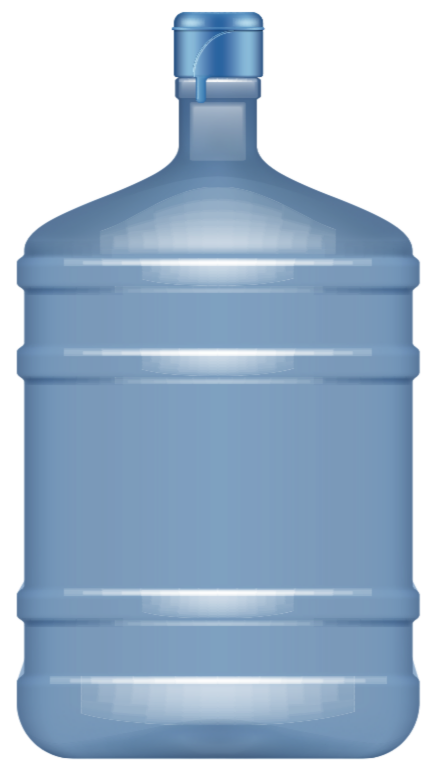
5 Gallons
41.7 lbs.
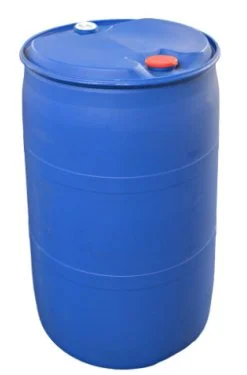
55 Gallons
458.7 lbs
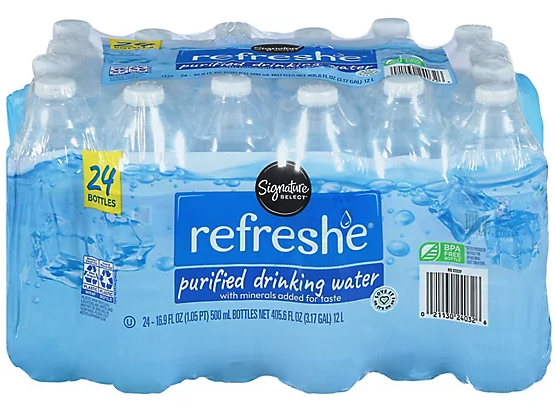
3.17 Gallons
26.4 lbs.
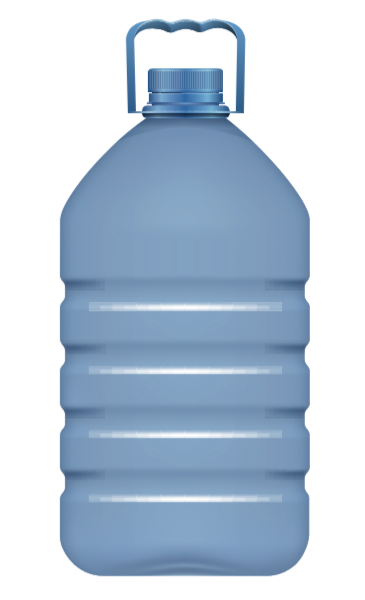
1 Gallon
8.34 lbs.
Safety Considerations

Potable means “safe to drink.” Potable water is water that’s not contaminated and is safe to use for drinking, brushing your teeth, food preparation and hygiene. People and animals should only consume potable water.
Rivers, streams, ponds and lakes might be contaminated with livestock waste, human sewage, chemicals and other contaminants that can lead to illness.
Avoid water that contains floating matter.
Avoid water that has an odor or dark color.
Avoid water contaminated with fuel or toxic chemicals since it can’t be made safe by boiling or disinfection.
Never use floodwater.
Water typically weighs 8.3 pounds per gallon. Store it where you can reach it and move it.
Never use pool cleaning tablets for drinking water.
If you are unsure if your water is safe, do not use it.
HOW TO STORE WATER


Storing water for use during a disaster is critical. Just like with food, it can be difficult to find extra space to store your emergency water supply. Store what you can, and keep in mind the following:
Store water where anyone in the household can access it.
If possible, store water in a dark, dry, consistently cool space that stays at a relatively constant temperature (50-70 F or 10-21 C). Treat your water if you have any concerns.
If possible, do not store it in direct sunlight.
Do not store water near chemicals, fuel, pesticides, herbicides, or products with strong odors that can be absorbed by the storage container and transferred to the water.
If possible, store parts of your water supply throughout your living space so if a disaster damages part of your living space, you can still access other parts of your supply.
Store some water in your freezer to create jugs of ice that can be used in a cooler when transporting food and provide safe drinking water as they melt.
Storing water up high can be dangerous because it could fall during an earthquake or be difficult to move.
Creative storage spaces for your water
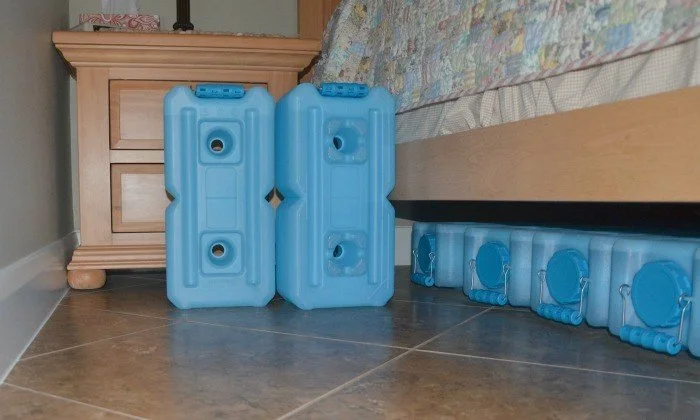
Under beds and sinks.
Behind the couch.
Back of cabinets and closets.
Behind books on bookshelves.
In garages and storage sheds.
Under car seats.
HOW TO SANITIZE WATER
When in doubt about water’s quality, purify it. There are five main ways to purify water; most of these methods are low-cost, and you likely already have some supplies. See page 68 for step-by-step instructions on each of these methods:
Boiling: Boil water for at least one minute. In most cases, this is the safest method of treating water.
Filtration: This mechanically removes contaminants from water. Carefully follow the manufacturer's instructions for your water filter.
Water purification tablets: National Sanitation Foundation (NSF)-approved products are recommended. These tablets are small, lightweight and inexpensive. Be sure to follow instructions closely.
Chemical disinfection: Iodine and tablets containing iodine or unscented bleach. Follow the manufacturer's instructions
on the label or package. Note, water disinfected with iodine is NOT recommended for people who may be pregnant, people with thyroid issues or those with hypersensitivity to iodine. No one should continuously use iodine for more than a few weeks at a time.Distillation: Water that has been boiled into vapor and condensed back into a liquid in a separate container.
OTHER CONSIDERATIONS
Powdered drink mixes, like Kool-Aid, Crystal Light or Gatorade powder packets can improve the taste of disinfected water. It’s a good idea to keep some with your water supply.
Soft drinks, caffeinated beverages like coffee and tea, and alcohol should not be substituted for water in your calculation of water needs.
Reduction in water supplies can result in poor livestock performance and condition. Locating additional sources of stock water becomes critical to avoid damage to both animals and range resources.