
Unit 3 - Food Plan
Quick-Start Steps
Safety Considerations
Create a Non-Perishable Food Inventory
How to Store Food
Different Ways to Cook Food
Other Considerations
Safety Considerations
Do not eat refrigerated food if you’ve lost power for longer than four hours and do not eat any frozen food that has thawed.
Throw away any food that’s been at room temperature for two hours or more.
Use non-perishable, pasteurized milk in cans or cartons quickly once opened.
Cooking indoors with barbecues or grills can lead to deadly consequences,
including the risk of carbon monoxide poisoning, fires and other life-threatening hazards. When faced with a power outage, always use
safe and approved alternative methods for cooking, such as camp stoves, portable butane stoves or outdoor cooking equipment specifically designed for indoor use.Be cautious of dented, deformed or bloated cans, as this can be an indication of spoiled food that can be deadly.
Check expiration dates and rotate food out as needed.
To keep things sanitary and reduce fire risk, don’t let food waste
accumulate inside.
Keep cooking and eating utensils clean.
Keep food in covered containers.
Managing Food without Power
Keep the refrigerator and freezer doors closed as much as possible.
The refrigerator will keep food cold for about four hours if it is unopened.
Refrigerated or frozen foods should be kept at 40 degrees Fahrenheit or below for proper food storage.
Use a refrigerator thermometer to check temperature.
Refrigerated food should be safe as long as the power was out for no more than four hours.
Discard any perishable food such as meat, poultry, fish, eggs or leftovers that have been above 40 degrees Fahrenheit for two hours or more.
Can Safety
Do Not eat foods from cans that are swollen, dented or corroded, even though the product may look safe to eat.
Do Not eat any food that looks or smells abnormal, even if the can looks normal.
Throw away any food that has an unusual odor, color or texture.
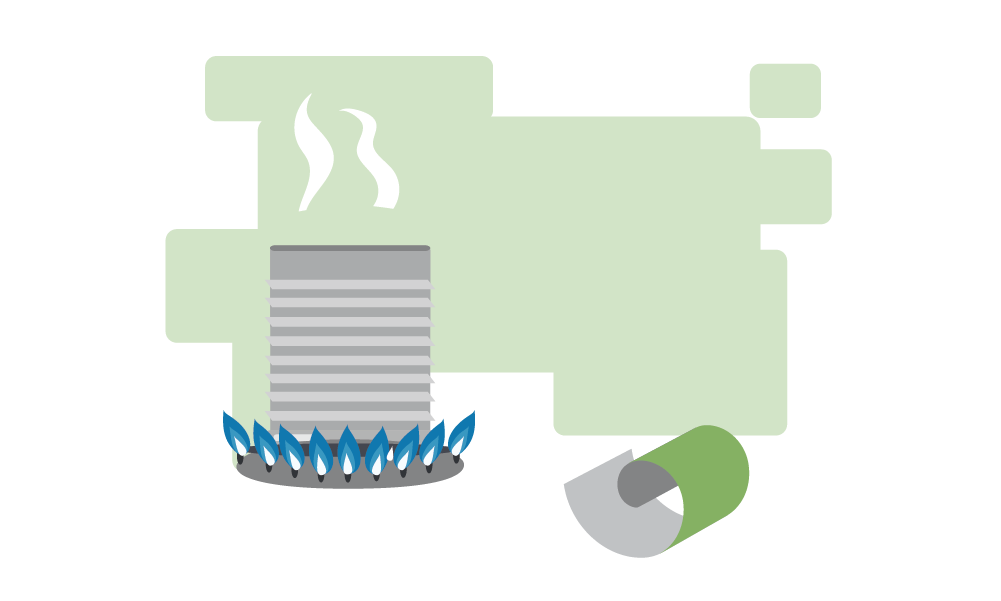
To heat food in a can:
Remove the label.
Thoroughly wash and disinfect the can. (Use a diluted solution of one part bleach to 10 parts water.)
Open the can before heating.

CREATE A NON-PERISHABLE FOOD INVENTORY



Gathering two weeks’ worth of food may seem overwhelming. Begin by starting small, recognizing it may take a while to build up a food stash. Here are some easy ways to create your non-perishable food inventory:
When dealing with an emergency, eating unfamiliar foods places more stress on everyone, especially young children. Choose foods your household will eat that don’t require refrigeration and have a long shelf life. Suggested emergency food items include:
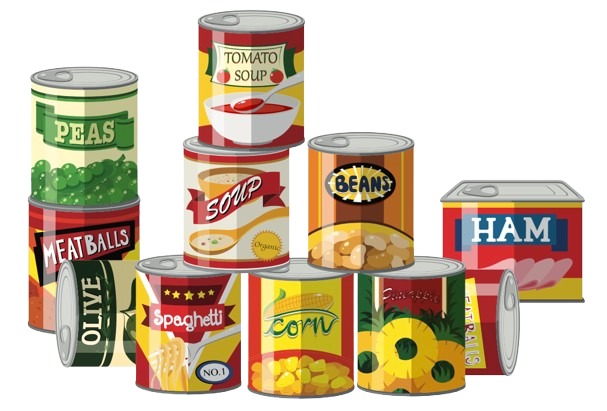
Ready-to-eat canned meats, fish, fruits and vegetables.
Protein bars and fruit bars.
Pudding cups.
Dried cereal, granola and trail mix.
Nut butters (some come in powdered form).
Dried fruit.
Comfort foods.
Rice cakes and crackers.
Canned soups and chili.
Canned and boxed juices.
Non-perishable, pasteurized milk in cans or cartons.
Powdered milk (requires water to reconstitute).
Food for infants and extra water to constitute baby formula.
LOW COST
Add 1 can per shopping trip.
Take advantage of sale items.
Stock up on bulk Beans & Rice.
Buy seasonal produce and freeze, can, dry or pickle it.
Buy day-old bread and freeze it.
HIGH COST
Buy freeze-dried meals w/ 20-30 year shelf life.
MRE’s
Dehydrate fruits and vegetables.
Hunt & make your own jerky.
Garden & grow your own.
HOW TO STORE FOOD
It can be difficult to find extra space to store your emergency stash. Here are some helpful tips on storing supplies:
If space in your home is limited, be creative with finding space in the back of closets or cabinets, or under furniture, such as beds or couches. Additionally, take some time to declutter to create more usable space.
Keep in a cool, dry space.
Be mindful of where you store bagged items since they can be easily chewed through by insects and animals.
Don’t pack away supplies and forget about them. Rotate your extra supplies into your regular meal routine as they start to expire.
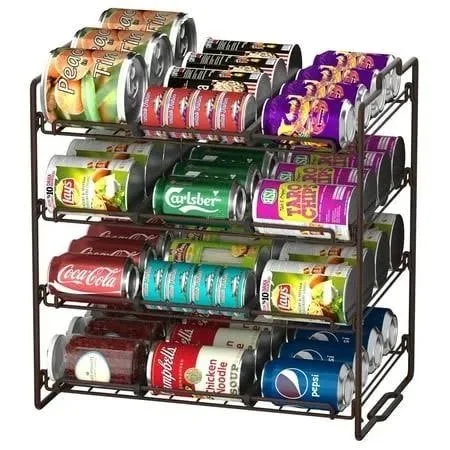
Consider a can organizer rack. Excellent for maintaining food rotation and storage in small spaces.
DIFFERENT WAYS TO COOK FOOD
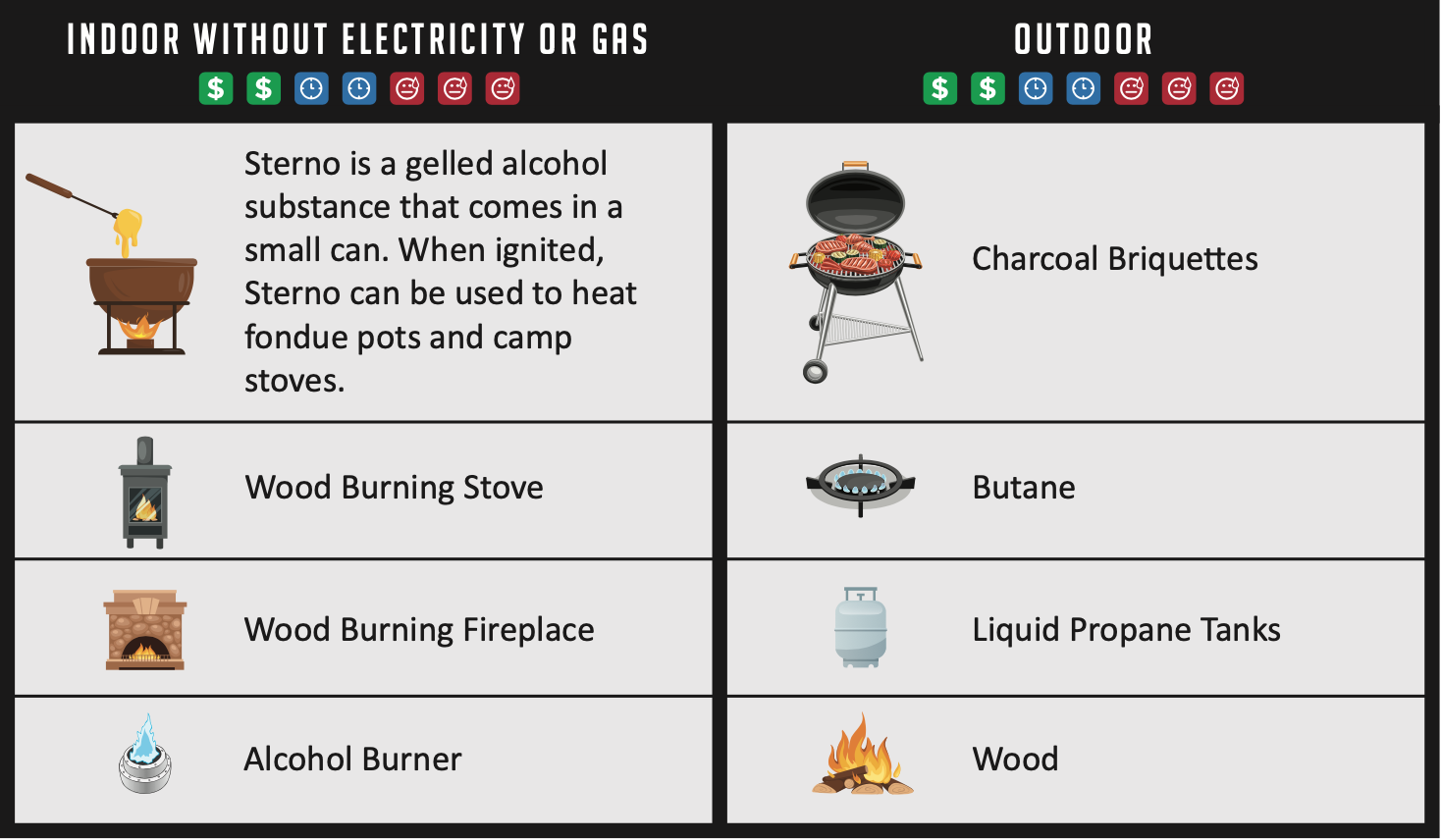
While you’re building up your food supply, think about how you might cook indoors without traditional appliances that require power and how you might cook outdoors. Whatever alternative cooking methods you prefer, it’s best to have more than one in mind and stock the necessary fuel sources.
Here are some alternative cooking methods ☞
Other Considerations
Avoid salty foods that will make you thirsty.
Remember special dietary needs and cultural considerations.
Use disposable or inexpensive dinnerware and utensils that are easy to clean with minimal water.
Stock a variety of alternative fuel sources to use when preparing food, such as charcoal, propane or wood.
Have multiple fire sources (Lighters, Matches, etc.)
Eat foods from your stash regularly to ensure they don’t expire.